
Enterprise AI Series: The AI Evolution of Non-Native AI Companies
Enterprise AI Series: issue 1

Hi, this is the first in a series of articles on Enterprise AI.
Enterprise AI refers to applying AI across various business functions and processes within an organization. It goes beyond simple automation and aims to solve complex business problems, improve decision-making, and drive innovation at scale.
Current examples: Using CoPilot across Office 365 apps or Gemini across Google Workspace apps
Future-state of Enterprise AI: Using CoPilot or Gemini’s interface to run workflows across various systems.
Example: “Hi CoPilot (or Gemini),
Goal: I want to make sure we achieve a 95% renewal rate again this quarter.
Instructions:
Create a table of accounts up for renewal this quarter, sorted descending by revenue from @NetSuite and analyze their engagement levels from @Salesforce highlighting those at high risk of churning. Send an email in @Outlook to the VP of Customer Service to 1) review the renewal automation workflows and 2) initiate human outreach to the high risk accounts.”
What's in this issue:
The 10 steps of the current AI evolution happening in companies right now
Why most firms get stuck at steps 5 and 7
Next issue sneak peak: Organizational AI Implementation Framework
Who this is for:
Anyone looking to move beyond individual ChatGPT experiments to true enterprise transformation
Sales leaders exploring AI integration for their teams
Revenue teams stuck in the "crawl" phase of AI adoption
Non-technical executives seeking practical AI implementation frameworks
The Reality Check
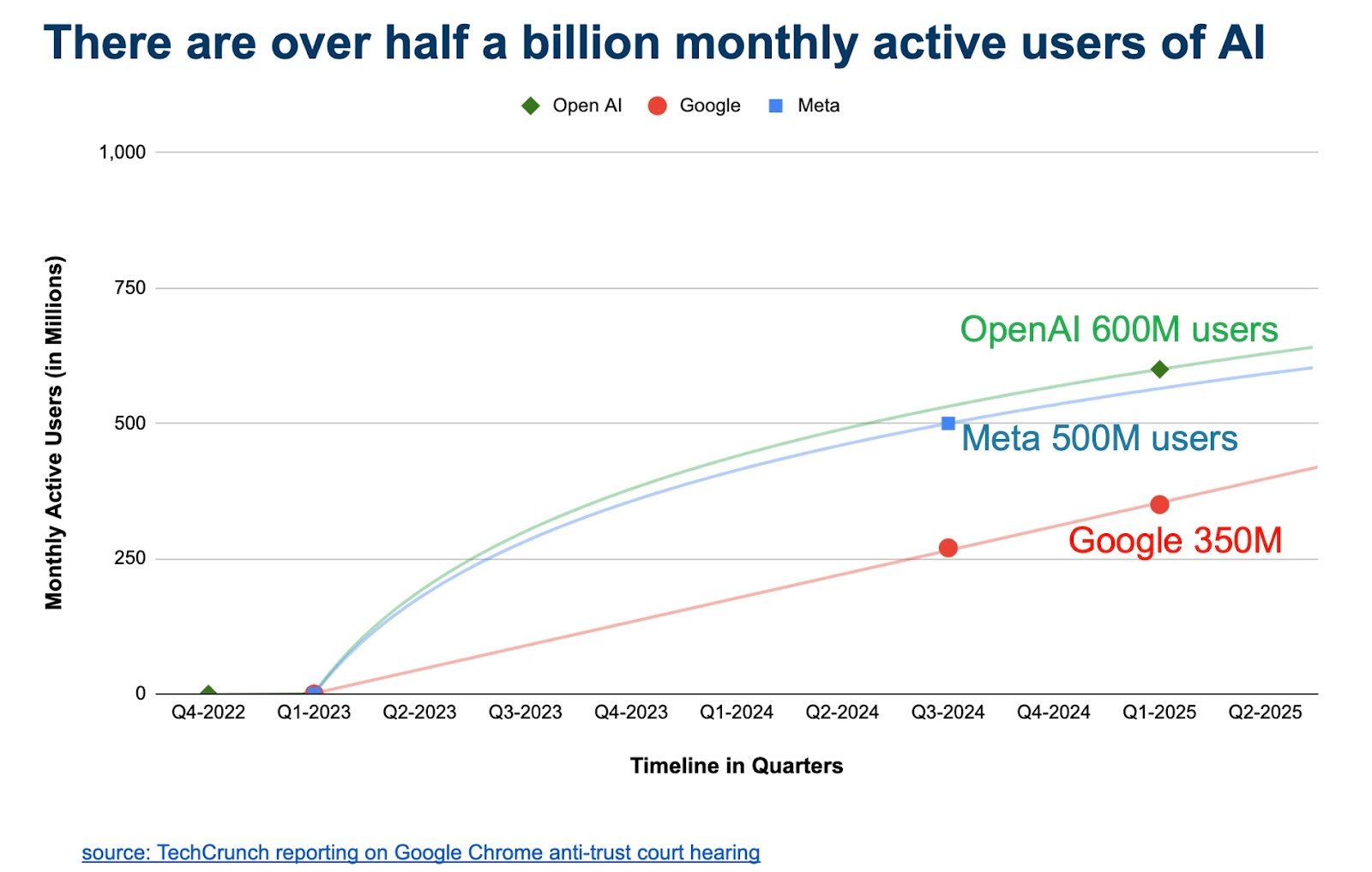
For those not in AI-native companies, the journey looks remarkably similar across industries.
note:
AI-native company are companies whose first product or service is a generative AI solution. i.e: OpenAI, Anthropic, Midjourney, Jasper, Scale AI.
For context, currently there are three generations of business in the workplace:
Legacy (pre-internet), Digital native (internet era), AI-native (AI-era).
After advising on $500M+ in revenue and building AI agents for the last two years, I've identified a predictable pattern that most organizations follow—and where they typically get stuck.
The 10-Stage AI Evolution (Where Is Your Company?)
Stage 0: The Evaluation phase
Pick a path and Lets Go, or Let’s get our ducks in a row first
Pick at path and figure it out along the way approach
Stay in existing ecosystem (Google or Microsoft)
Go outside of the ecosystem (OpenAI, Anthropic, etc.)
Lets get our ducks in a row first. This approach often results in analysis-paralysis as the generative AI revolution is so new and moving faster then any other technology revolution in history
AI Strategy
Usage guidelines
Governance plan
Cost controls
Stage 1: AI Pioneers Emerge
Leading-edge employees start using LLMs
ChatGPT is often the gateway tool
Individual’s evolution:
Discovery phase ( “What can this do,” “Is it accurate,” “How can I use it every day”)
Brainstorm phase ( “I’m going to ask ChatGPT before I start this project”)
Use Case phase ( “Here are my prompts for this use case” )
See my previous Substack about making a social media content manager
Creative phase (“Let me try this prompt I found on linkedin” -> “I adjusted the prompt for my workflow”)
See my previous Substack on a Market Insights prompt workflow
Individuals gain hours back in their day and use it to learn more about AI
Stage 2: The Followers Join
Others follow the AI pioneers' lead
Faster adoption through internal knowledge sharing
Department-specific use cases emerge
Informal best practices develop
AI communities develops first via slack channels then structured lunch & learns
Stage 3: The App Shopping Spree
AI apps are purchased across departments
CRM AI Agent: Salesforce AgentForce
Lead Gen Automation: ColdIQ, LinkedHelper, HeyReach
Activity & Performance Tracking: WeFlow, Gong
Stage 4: The Integration Attempt
Applications (AI & legacy) are chained together
Integration tools are leveraged: Zapier, N8N, Make
Cross-functional workflows emerge: Prospecting & automation
Stage 5: The Automation Push
AI automation tools are leveraged
GTM engineering: Clay (most well known), Cargo (GTM engineer’s preferred UI)
Lead Gen, CRM Enrichment, Market Sizing, Reporting
Initial ROI becomes measurable
see my linkedIn Post on “Modeling the business case for AI Tools”
🚧 FIRST ROADBLOCK: Most firms get stuck here
Stuck points:
AI Tool bloat
Organizations recognize need for an integrated plan and some one to manage it
AI Agents need clear designated sources of truth to have the right context to answer questions
Observability and governance controls are needed to limit AI Agents so they don’t email all contacts from a CRM or report proprietary company financials on a slack channel.
Stage 6: The AI Manager Hire
Firms hire or designate an AI Manager
When the AI manager sits in IT = slower adoption, but less AI gaps between departments
When the AI manager sits in Sales = faster adoption, clear and measurable impact, but AI skills gap develops between departments
Demand for department-specific AI leads emerge i.e. Marketing AI Mgr. HR AI Mgr., etc.
Stage 7: The Reality Check
AI Manager discovers the data problem
Either the firm addresses its lack of data governance
Or the AI manager becomes the AI tool help desk support instead of a focusing on the bigger picture of creating an AI-enabled department
Company continues to buy tools rather than implement Enterprise AI systems that the often already have access to:
Microsoft: Fabric unified data platform + CoPilot Studio
Google: BigQuery data warehouse + Vertex AI agent Studio
Amazon: Redshift data warehouse + Bedrock Agent Studio and Amazon Q for Business
🚧 SECOND ROADBLOCK: Firms stall again (but are getting better at AI)
Stuck points
Company can’t solve cross departmental business problems with their AI tools.
Example: Why are we losing market share in EMEA?
Lack of defined knowledge sources
Organizations need designated locations (files in a folder, tables in a data warehouse) for monthly business reviews, sales goals, sales playbooks, marketing strategy, marketing assets, brand voice, etc. so an AI Agent knows where the right source of knowledge is to gain the needed context to answer complex business questions that require context as well as access to systems.
Stage 8: The Consultant Gamble
Consulting firm gets hired
Many firms don’t have an actual Enterprise AI setup internally yet
Implementations become theoretical "best guesses"
Is the knowledge base better to house in Sharepoint, Fabric One Lake or Azure blob?
Results vary wildly
The organization accelerates its understanding of AI for their business
Stage 9: The payoff
A new way of working
The organization is using AI every day
Sales & Marketing as a percent of revenue is decreasing due to
Doing more - generating more leads, creating more content, servicing more support questions
With less - less tools, less staff, more focused ad spend
Developed an agile revenue organization rather than reactive one
AI observability and guidelines are in place
An Intellectually-agile culture able to adjust to advances in AI
Key Insight
Very few consulting firms have actual Enterprise AI user experience. Make sure your implementation partner has their own Enterprise AI strategy, framework, and working implementation.
We use Microsoft Fabric + Copilot for its single UI approach and emphasis on data governance.
We've also used Google BigQuery + Vertex AI for product development.
note: I’ll review both of these in future issues
What to sound smart? Here’s Andrew Ng’s AI formula: 👉 AI = ML × Data²
4 Bullets to remember:
AI tooling is too easy and can easily get out of control
Organizing a company's data is complex
Remember, AI is not a technology implementation.
AI is a work revolution that is bigger than the release of the internet
Tomorrow in this series:
I’ll share 4 Tips and a Framework to accelerate your AI evolution
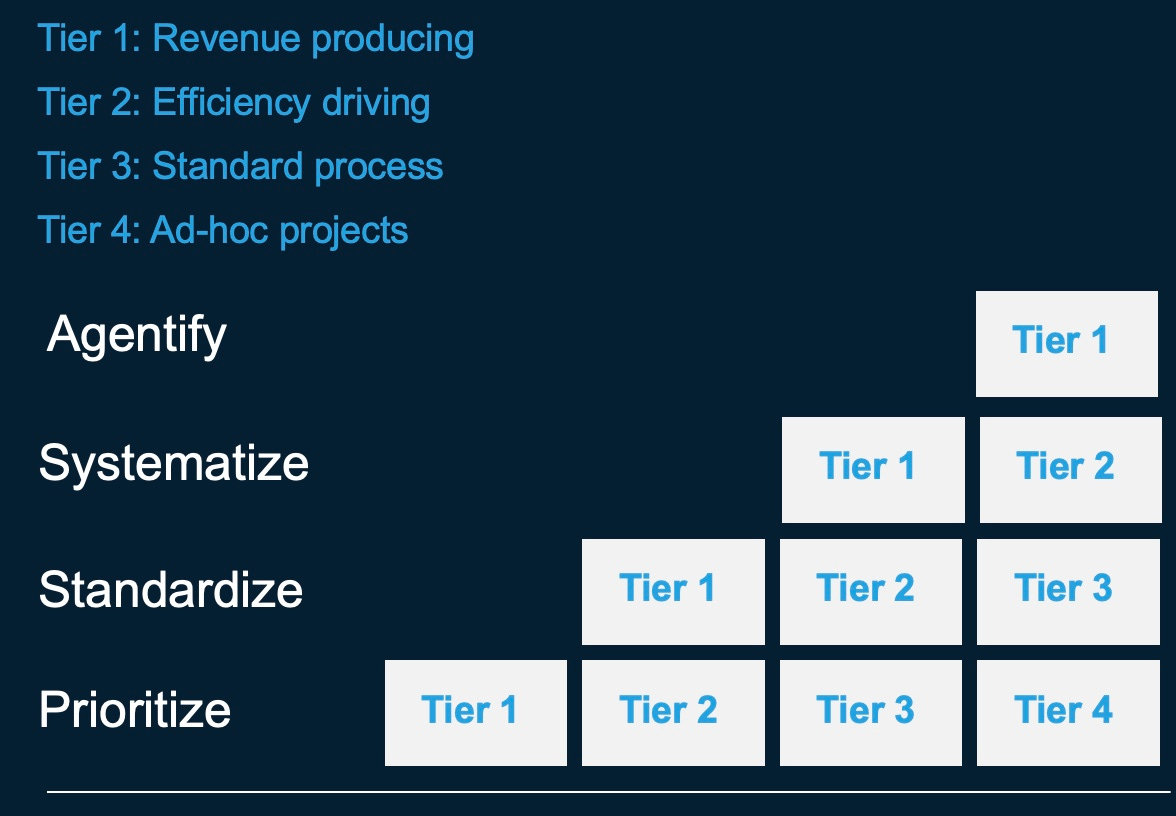
Sneak Peak: Here’s my Organizational AI Implementation Framework
Will Sullivan is a Strategic Revenue Advisor and Enterprise AI Architect with $700M in revenue experience and $25B+ in M&A deal experience.
Feel free to contact him on on LinkedIn
Next in this series: 4 Tips and a Framework to accelerate your AI evolution